
Comparison · Beauty Tools
Red Light Therapy Wand vs. Mask: Which At-Home Device Makes Sense?
Searches for red light therapy hit an all-time high. Here's how handheld wands and full-face masks differ, what the evidence supports, and how to check a device before you buy.
Published 4 min read
The quick answer
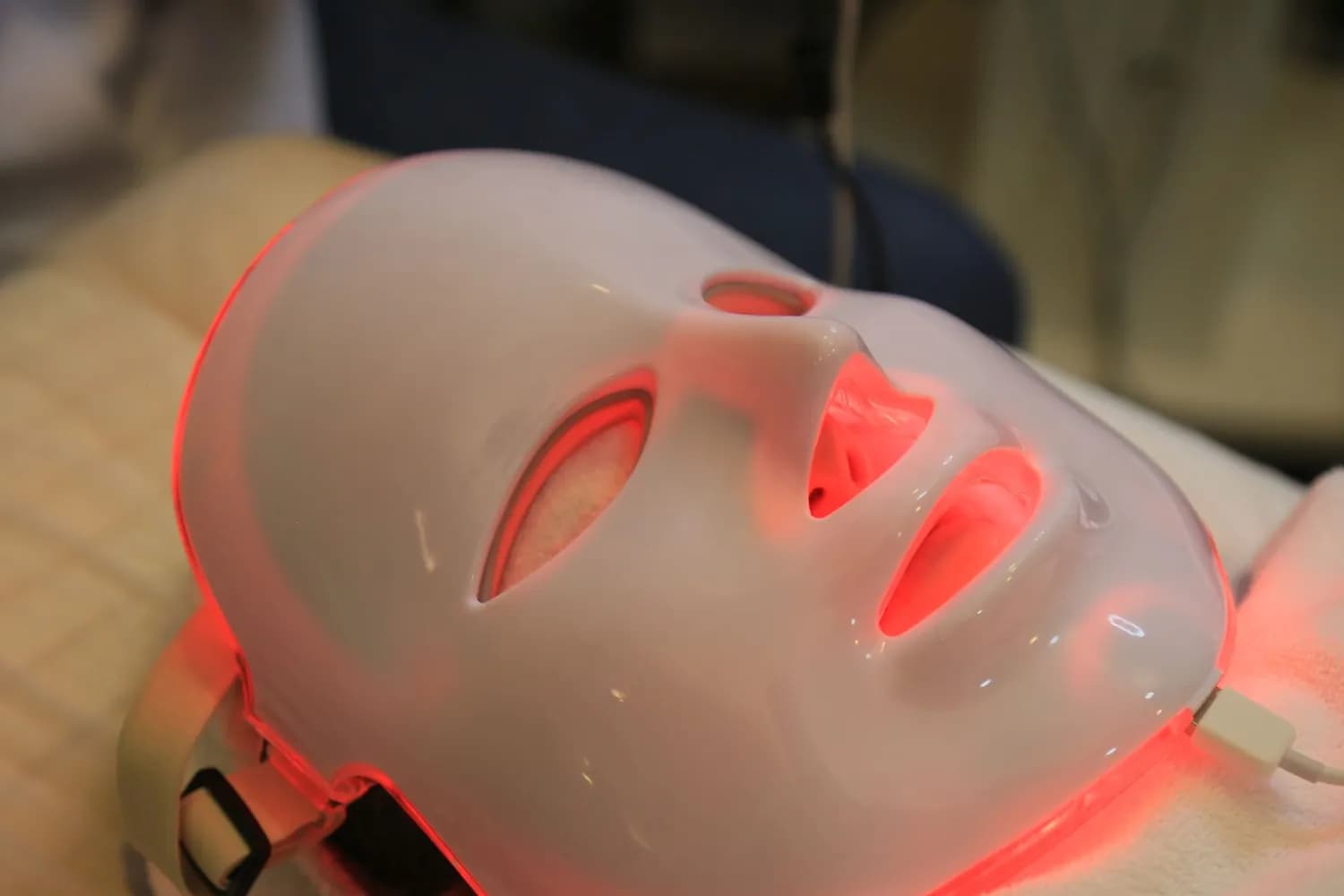
Choose a wand if you want targeted use on a few areas, portability and a lower price; choose a mask if you want hands-free, even coverage of the whole face. Either way, results from at-home red light are modest and depend on consistent use, so prioritize published wavelengths, a verifiable FDA 510(k) record and a fair return window over the form factor.
Key takeaways
- Wands treat one area at a time; masks cover the whole face at once.
- Human evidence for at-home red light and wrinkles is promising but limited, and many studies are funded by device makers.
- FDA 510(k) clearance is a useful check, but it is not proof that every marketing claim is true.
- Wavelength, light intensity and the schedule you can keep matter more than the shape of the device.
Red light therapy has moved from dermatology offices to bathroom shelves, and Google searches for it reached an all-time high in 2025. The two most common at-home formats are handheld wands and full-face masks. They use similar light, but they ask very different things of you.
How the two formats differ
A wand is a small handheld device with a panel of LEDs that you hold against one area of the face at a time. A mask covers the whole face at once and is usually worn hands-free for a timed session.
| Consideration | Wand | Mask |
|---|---|---|
| Coverage | One area at a time | Whole face at once |
| Time for a full face | Longer — you move it area by area | One timed session |
| Hands-free | No | Usually yes |
| Portability | Small; easy to travel with | Bulkier |
| Extra features | Some add warmth, vibration or microcurrent | Some add near-infrared or blue light modes |
| Fit issues | None | Fit varies with face shape |
What the evidence says
The research on red light for skin is real but limited. A dermatologist interviewed by NBC News noted that there aren't yet enough human studies to make firm claims about reducing wrinkles or treating photoaging, and that many studies are funded by companies that make red light products. A 2018 systematic review of randomized trials found its strongest support for LED use in acne and some wound-healing uses, with many small studies and widely varying treatment settings.
The practical takeaway: expect modest, gradual changes at best, and treat dramatic before-and-after claims with caution. Our guide to LED face masks goes deeper into the research.
How to vet any red light device
Red light device checklist
- Published wavelength in nanometers (red light is commonly around 630–660 nm).
- Published light intensity (irradiance), if the brand shares it.
- A 510(k) number you can verify in FDA's public database.
- A session schedule you can realistically keep for weeks.
- Clear eye-safety guidance and warnings.
- A return window long enough to try the routine.
Many listings say "FDA cleared." Under FDA's 510(k) process, clearance means the device was found substantially equivalent to one already on the market. It's a useful signal, but it doesn't confirm every advertising claim. Search the number in FDA's 510(k) database before you buy.
A wand we've researched
The Solawave wand below publishes its wavelength and intensity, and its FDA 510(k) clearance (K232863) is listed in FDA's database. That makes it easier to evaluate than many unbranded devices.
Solawave
See product photos on Amazon4-in-1 Radiant Renewal Skincare Wand with Red Light Therapy (Charcoal)
by Solawave
Best for: People who want to try red light on specific areas such as the forehead, around the eyes or the neck
A handheld wand that combines a 630nm red-light panel with galvanic current, gentle warmth and vibration, used for 3 minutes on each of four areas. Unlike most red-light gadgets on Amazon, its regulatory status is easy to check: FDA 510(k) K232863 covers the Radiant Renewal Skincare Wand for facial and neck stimulation and for treating facial wrinkles with red light. Clearance isn't proof of every marketing claim, and the wand treats one small area at a time rather than the whole face at once like a mask.
- Red light at 630nm (±10nm), 55 mW/cm² irradiance from 14 LEDs, per Solawave's published specifications
- Galvanic current (about 200 µA), warmth up to 41°C/105.8°F and vibration massage (about 12,000 rpm)
- 3 minutes per area with a vibration cue, auto-off after 12 minutes; Solawave suggests 3–5 sessions a week
- FDA 510(k) K232863: Radiant Renewal Skincare Wand (HD-15, HD-15A), cleared December 13, 2023, product code OHS (light-based over-the-counter wrinkle reduction)
- Rechargeable with a magnetic USB cable; brand states up to 90 minutes per charge (about 7 sessions)
- In the box: wand, magnetic USB charging cable, travel case, quick-start guide and manual
Product details last checked October 12, 2026. Price and availability can change — check the listing.
Strengths
- Verifiable FDA 510(k) clearance with the K number published by the brand, which makes it easier to evaluate than many unbranded red-light devices
- Wavelength and irradiance are published, so you can compare it with masks on actual numbers
- Small and cordless, so it fits into an existing routine and travels easily
- Solawave offers 60-day returns, including opened products, and a 1-year limited warranty
Limitations
- Treats one small area at a time; a full routine means 12 minutes of holding and gliding, unlike a hands-free mask
- The brand recommends its LightBoost Activating Serum (sold separately), which is an ongoing cost
- The clearance covers red light for facial wrinkles; listing wording about depuffing, firming and seeing results in two weeks is the brand's marketing, not something FDA verified
- Several contraindications rule it out for some people (see who should skip it)
May suit you if…
- People who want to try red light on specific areas such as the forehead, around the eyes or the neck
- Shoppers who prefer a device whose FDA clearance they can look up themselves
- Travellers who want something smaller than a mask
Consider skipping it if…
- You are pregnant, planning a pregnancy or breastfeeding; Solawave lists these as contraindications
- You have a pacemaker or other implanted medical device, epilepsy or a seizure disorder, photosensitivity, active cancer, or an allergy to aluminium or plastics
- You are under 18
- You've had recent injectables or facial surgery and haven't checked the waiting period with your provider
- You want hands-free, whole-face sessions; a mask suits that better
Check before you buy
- Confirm the listing is the 4-in-1 Radiant Renewal wand sold by Solawave (Charcoal here), not the 2-in-1 Skincare Mini or an older model
- Look up K232863 in FDA's 510(k) database; remember that clearance is not FDA approval
- Budget for the activating serum or a compatible water-based gel
- The brand frames results around at least eight weeks of 3–5 sessions a week, so consider whether you'll keep that up
- Treat 'visibly firmer', 'depuff' and timeline wording on the listing as brand claims
Who should choose which
May suit you if…
- You want to target specific areas, such as around the mouth or forehead.
- You travel often or have little storage space.
- You'd like a lower-cost way to see whether you'll keep up a routine.
Consider skipping a wand if…
- You want full-face treatment without holding anything — consider a mask.
- You're unlikely to spend several minutes per area, several times a week.
- You take medication that increases light sensitivity — ask your doctor first.
The bottom line
The shape of the device matters less than its specifications and whether you'll use it consistently. Choose a wand for targeted, portable use and a mask for hands-free coverage, verify any FDA claim yourself, and keep expectations realistic. For more, see our at-home facial device checklist, or compare a different technology in our guide to at-home ultrasonic devices.
Frequently asked questions
Is a red light wand as effective as a mask?
There's no head-to-head research comparing wands and masks. What matters more is the wavelength, how much light reaches the skin and how consistently you use it. A wand treats one area at a time, so a full-face session takes longer.
How do I check if a red light device is FDA cleared?
Ask for the 510(k) number and search it, or the company name, in FDA's public 510(k) database. A cleared device should appear with its clearance date and intended use.
How often should I use a red light wand?
Follow the manufacturer's schedule; many recommend several short sessions a week. More frequent use isn't necessarily better, and you should stop if your skin becomes irritated.
How this guide was researched
This guide is based on independent research of the sources listed below. We did not conduct hands-on testing of products for this article. Content is general information, not medical advice; talk to a dermatologist or other qualified clinician about specific skin concerns. Read our editorial policy.
Sources
Factual claims in this guide are based on the following references. Links open the original source.
- What is red light therapy and does it work? — NBC News SelectSupports: Dermatologist view that human evidence for wrinkle reduction is limited; many studies are industry-funded; wands vs masks as the main formats.
- Light-emitting diodes in dermatology: A systematic review of randomized controlled trials — Lasers in Surgery and Medicine (via PubMed)Supports: Evidence grades for LED uses and limitations of the trials.
- Premarket Notification 510(k) — U.S. Food and Drug AdministrationSupports: What 510(k) clearance means.
- 510(k) Premarket Notification Database — U.S. Food and Drug AdministrationSupports: Looking up a device's clearance record (e.g. K232863).
Written by
Editor, The Gilded Skin
Elise Marlowe is the editor of The Gilded Skin. She researches beauty tools, skincare routines and vanity organization, reads the dermatology and regulatory sources behind each guide, and writes about what is worth buying and who should skip it. She is not a dermatologist, and her guides say clearly when they are based on research rather than hands-on testing.
More from EliseKeep reading

Category Guide · Tools
LED Face Masks: Features, Limitations and What to Compare Before You Buy
At-home LED masks are popular and expensive. Here's what the research does and doesn't show, what FDA clearance actually means, and the specifications worth comparing.
· 5 min read
Buying Checklist · Tools
What to Consider Before Buying an At-Home Facial Device
Before spending on an LED mask, cleansing brush or other facial device, work through these questions about evidence, safety, time, ongoing costs and returns.
· 4 min read
Comparison · Tools
Facial Rollers vs. Gua Sha: How to Compare Them (and What the Evidence Says)
Rollers and gua sha stones are among the most popular beauty tools. Here's how they differ in technique, materials and care — and what a recent randomized trial did and didn't find.
· 5 min read