
Buying Checklist · Beauty Tools
What to Consider Before Buying an At-Home Facial Device
Before spending on an LED mask, cleansing brush or other facial device, work through these questions about evidence, safety, time, ongoing costs and returns.
By The Gilded Skin Editors
Published 4 min read

The quick answer
Before buying a facial device, define the specific goal, check what independent evidence exists for that type of device, verify any regulatory claim, read the contraindications and manual, and count the real costs — replacement parts, consumables and the time each session takes. A long return window lets you find out whether you'll actually use it.
Key takeaways
- Match the device to one specific goal; vague promises make devices hard to evaluate.
- Look for independent research on the device type, and treat brand-funded results cautiously.
- Verify FDA clearance claims yourself in FDA's public 510(k) database.
- Ongoing costs and time commitment often decide whether a device gets used.
At-home facial devices range from simple tools to sophisticated electronics with prices to match. The best way to avoid an expensive drawer-dweller is to answer a few questions honestly before you buy. This checklist works for any device type; for specifics, see our guides to LED face masks, cleansing brushes and ultrasonic skin devices.
1. What, specifically, do you want it to do?
"Better skin" isn't a goal a device can be judged against. Name one specific outcome — a cleansing ritual you enjoy, a calming massage, a particular concern a dermatologist has discussed with you — and check that the device's intended use matches it. If you have an active skin concern, a dermatologist visit first can save you from buying the wrong thing.
2. What does independent evidence say about this type of device?
Look for research on the device category from sources other than the brand. Even well-studied categories have gaps: a systematic review of LED trials, for example, noted small sample sizes and widely varying treatment parameters. Brand-funded studies aren't worthless, but ask who ran them, how many people took part, whether there was a comparison group and what was actually measured.
3. Can you verify the regulatory claim?
If a device claims to be FDA cleared, it has generally gone through FDA's 510(k) process, which establishes substantial equivalence to an existing legally marketed device. It's not the same as approval, and it doesn't verify every advertising claim. You can search FDA's 510(k) database by company or device name. Note that many simple tools, such as manual rollers, don't make claims that would require clearance.
4. Is it safe for you?
Read the device's warnings and contraindications — many brands publish the manual online — before buying, not after. Pay attention to any listed conditions, medications or circumstances in which the device shouldn't be used, and ask your doctor or pharmacist if anything applies to you. Also consider friction: the American Academy of Dermatology notes that tools other than fingertips can irritate skin during cleansing.
5. Will you actually use it?
Most devices depend on consistent use. Check the recommended session length and frequency, and be realistic about whether it fits your mornings or evenings. A ten-minute session several times a week, for weeks, is a real commitment.
6. What does it cost to keep using?
| Cost | Examples | What to check |
|---|---|---|
| Replacement parts | Brush heads, attachments | Recommended replacement interval and availability |
| Consumables | Conductive gels or companion serums the brand requires | Whether any compatible product works or only the brand's own |
| Power | Batteries, chargers | Battery life, replaceable versus built-in battery |
| Repairs | Out-of-warranty faults | Warranty length and what it covers |
7. How do you clean and store it?
Devices that touch skin need cleaning after use. Check the cleaning instructions, whether parts are removable and whether it's water resistant. Plan where it will live — our guide to organizing a vanity covers storage zones.
8. What happens if it isn't for you?
A generous return window is valuable for devices, because you won't know whether you'll use it until you try the routine. Check whether opened devices can be returned, who pays return shipping and how long you have.
The short version
- One specific goal, matched to the device's intended use.
- Independent evidence for the device type, read critically.
- Regulatory claims verified in FDA's database where relevant.
- Warnings and contraindications read before purchase.
- A session schedule you can realistically keep.
- Ongoing costs counted: heads, gels, batteries, repairs.
- Clear cleaning instructions and a place to store it.
- A return window long enough to try it properly.
The bottom line
A facial device is worth considering when it serves a specific goal, has credible support for its type, is safe for you and fits your routine and budget over time. If it fails any of those questions, a simpler option — such as a facial roller or gua sha — or simply a consistent routine may be the better investment.
Frequently asked questions
Are at-home facial devices as effective as professional treatments?
You shouldn't assume so. At-home devices are designed for unsupervised use and may work differently from professional equipment. Compare the specific device's evidence and intended use, and ask a dermatologist if you're deciding between home and in-office options.
What does 'clinically tested' mean on a beauty device?
It's not a regulated standard. It can mean anything from a small brand-run study to a larger independent trial. Ask who ran the study, how many people took part and what was measured.
How this guide was researched
This guide is based on independent research of the sources listed below. We did not conduct hands-on testing of products for this article. Content is general information, not medical advice; talk to a dermatologist or other qualified clinician about specific skin concerns. Read our editorial policy.
Sources
Factual claims in this guide are based on the following references. Links open the original source.
- Premarket Notification 510(k) — U.S. Food and Drug AdministrationSupports: What 510(k) clearance means.
- 510(k) Premarket Notification Database — U.S. Food and Drug AdministrationSupports: Verifying a device's clearance record.
- Light-emitting diodes in dermatology: A systematic review of randomized controlled trials — Lasers in Surgery and Medicine (via PubMed)Supports: Example of evidence limitations for a device category: small samples, varied parameters.
- Face washing 101 — American Academy of DermatologySupports: Tools other than fingertips can irritate skin.
Written by
The Gilded Skin Editors
Editorial team
Articles under this byline are researched, written and edited by The Gilded Skin's editorial team using the sources cited on each page. We are not dermatologists or medical professionals, and we say clearly when a guide is based on research rather than hands-on testing.
Keep reading

Category Guide · Tools
LED Face Masks: Features, Limitations and What to Compare Before You Buy
At-home LED masks are popular and expensive. Here's what the research does and doesn't show, what FDA clearance actually means, and the specifications worth comparing.
· 5 min read

Category Guide · Tools
Facial Cleansing Brushes: Do You Need One, and What Should You Compare?
Dermatologists' basic advice is to cleanse with your fingertips. If you still want a brush, here's how silicone, bristle and sonic designs differ and who may want to skip them.
· 4 min read
Comparison · Tools
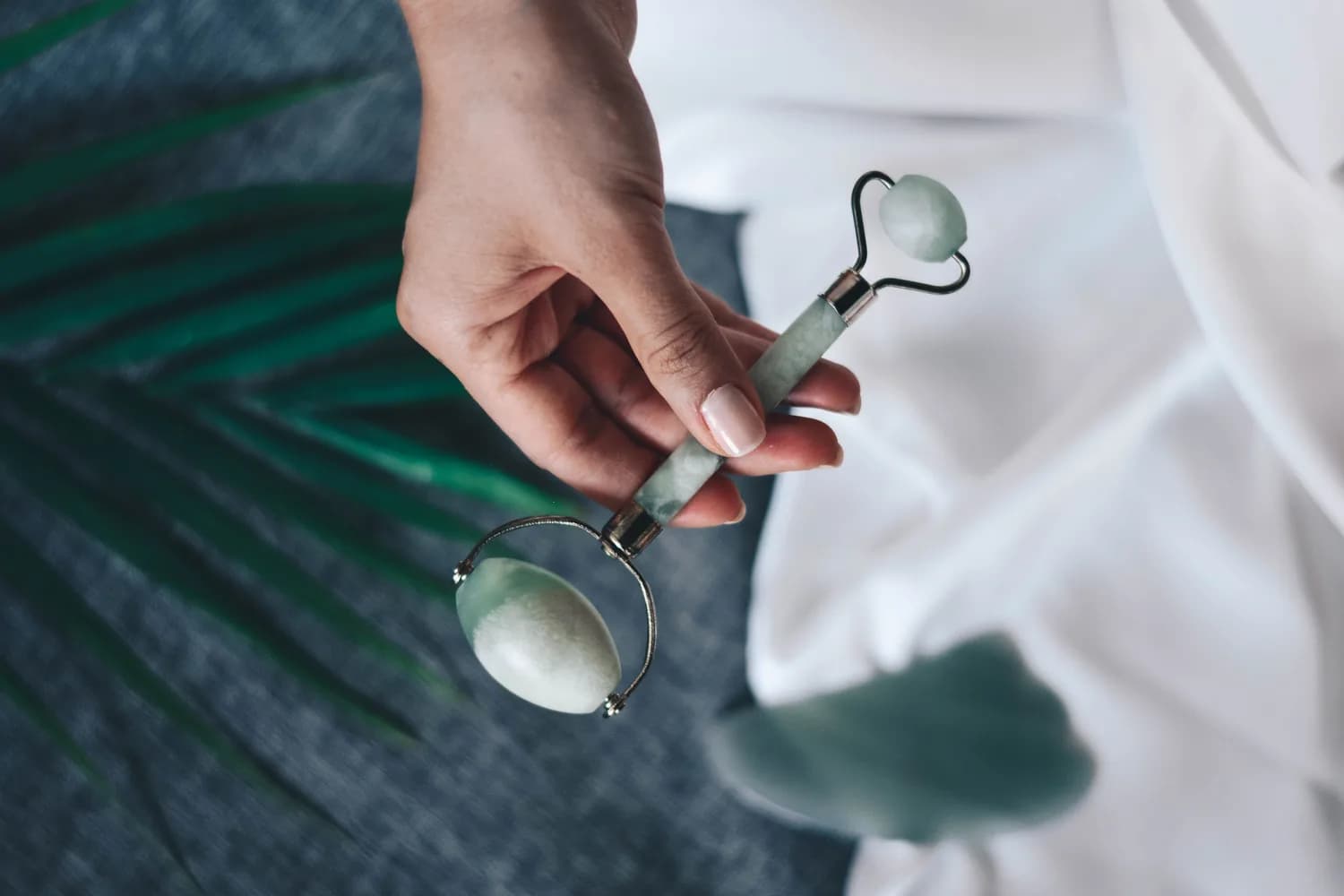
Facial Rollers vs. Gua Sha: How to Compare Them (and What the Evidence Says)
Rollers and gua sha stones are among the most popular beauty tools. Here's how they differ in technique, materials and care — and what a recent randomized trial did and didn't find.
· 5 min read