
How-To · Vanity & Organization
How to Organize Skincare Products on a Vanity So Your Routine Runs Itself
A calm, practical system for organizing skincare on a vanity or in a small bathroom: edit first, store by routine order, and choose organizers that protect your products.
By The Gilded Skin Editors
Published 4 min read

The quick answer
Edit out anything expired or unused, then group what's left by when you use it — morning, evening, weekly — and store each group in the order you apply it. Keep daily products within arm's reach, backups out of the bathroom, and everything away from heat and direct sunlight.
Key takeaways
- Organize around your routine, not around product categories or packaging.
- Heat and sunlight can make products deteriorate before their printed dates, so a sunny windowsill is the wrong place for a display.
- Keep only what you use daily on the counter; weekly treatments and backstock belong in a drawer or cabinet.
- Measure your space before buying an organizer, and favor materials that are easy to wipe clean.
A beautiful vanity is not the same as a well-organized one. The arrangement that looks best in photographs — every bottle on display, lined up in a sunny window — is often the one that makes a routine harder to keep and products harder to protect. The approach below works in reverse: start with how you actually use your skincare, then choose storage that fits.
Step 1: Edit before you organize
Organizing products you don't use only gives them a nicer home. Before buying a single tray, take everything out and sort it into three piles: use regularly, use occasionally, and haven't touched in months.
While you're sorting, check dates. In the U.S., most cosmetics aren't legally required to carry an expiration date, and FDA describes printed dates as "rules of thumb" rather than guarantees, so look for both an expiration date and the small open-jar symbol (for example, "12M") that shows how long a product is meant to last after opening. Discard anything that has changed in color, smell or texture. Eye-area products deserve extra attention: FDA notes that manufacturers usually recommend discarding mascara two to four months after purchase.
Step 2: Group by routine, not by category
The most useful organizing principle is the order in which you use things. The American Academy of Dermatology suggests applying products in a certain order: cleanser first, then any treatment, then moisturizer and/or sunscreen, then makeup. Store them in that same sequence, left to right, and the routine becomes almost automatic.
A simple grouping that works for most people:
- Morning: cleanser, any morning treatment, moisturizer, sunscreen.
- Evening: cleanser, evening treatment, moisturizer.
- Weekly or occasional: masks, exfoliants, tools you don't use daily.
- Backstock: unopened spares and travel sizes.
If a product appears in both routines, give it a single home at the point where the two routines overlap — usually the moisturizer.
Step 3: Use three storage zones
Once products are grouped, assign each group a zone based on how often you reach for it.
- The counter (daily). Only the products you use every day. A single tray defines the space and stops the collection from creeping across the counter.
- The drawer or cabinet (weekly). Treatments and tools you use a few times a week. Drawer dividers keep them upright and visible.
- Elsewhere (backstock). Unopened products don't need to be in the bathroom at all. A cool, dark closet shelf is a better long-term home.
Step 4: Protect products from heat and light
FDA's shelf-life guidance notes that products stored in high temperatures or exposed to sunlight can deteriorate well before their expiration date. In practice, that means:
- Keep displays away from sunny windowsills and radiators.
- Avoid open shelves right beside the shower, where products are repeatedly warmed by steam.
- Close caps and pumps fully after each use.
- Follow any storage instructions printed on the label, such as "store in a cool, dry place."
If you're wondering whether a dedicated beauty fridge solves this, our guide to whether a skincare fridge is worth it weighs the trade-offs.
Step 5: Choose the right organizer for your space
There is no single best organizer; the right one depends on your counter depth, how many daily products you have and how much you value seeing everything at a glance. Here's how the common types compare.
| Organizer type | Best for | Strengths | Limitations | Check before buying |
|---|---|---|---|---|
| Flat tray | A short daily lineup | Defines a zone; easy to lift and wipe underneath | Holds only a few items; tall bottles can tip | Interior dimensions and a raised lip |
| Tiered riser | Shallow counters with many bottles | Uses height instead of depth; labels stay visible | Back row can be hard to reach; more surfaces to clean | Step height versus your tallest bottle |
| Turntable (lazy Susan) | Deep cabinets and corners | Brings back-row items forward with a spin | Round shape wastes some corner space | Diameter versus cabinet depth and door clearance |
| Drawer dividers | Weekly products and tools | Keeps items upright and off the counter | Needs drawer space; fixed sizes may not fit | Drawer height and whether dividers adjust |
| Clear acrylic drawers | Larger collections | Visible contents; stackable | Fingerprints show; can feel bulky on small counters | Overall footprint and drawer depth |
For a small bathroom, vertical storage usually beats horizontal: a slim riser or a wall shelf away from the shower frees counter space without hiding what you use daily. Always measure the space — width, depth and the clearance under any mirror cabinet — before ordering.
Step 6: Keep it tidy with a five-minute reset
An organized vanity stays organized when resetting it is easy. Once a week:
Weekly vanity reset
- Return stray products to their zone.
- Wipe the tray and the counter underneath it.
- Check that caps and pumps are closed and clean.
- Move anything you haven't used this week to the drawer.
- Note any product that's nearly finished so you aren't caught without it.
The bottom line
Start by editing, group by the order you apply products, and store each group according to how often you use it. Choose organizers last, after you know exactly what needs a home, and keep everything away from heat, steam and direct sunlight. If your routine itself feels too long to organize, our simple morning skincare routine guide is a good place to start, and travelers can apply the same principles with our guide to choosing a travel skincare case.
Frequently asked questions
Where is the best place to store skincare in a small bathroom?
Choose a spot away from the shower, radiators and direct sunlight, such as a closed cabinet or drawer. FDA notes that products exposed to high temperatures or sunlight can deteriorate before their expiration date, so a cool, shaded spot is a better choice than an open shelf by a window.
How many skincare products should I keep on my counter?
There is no fixed number, but a useful rule is to keep only the products you reach for every day on the counter. Everything else can live in a drawer, cabinet or caddy that you bring out when needed.
How do I know when to throw out a skincare product?
Check for an expiration date, and for the open-jar symbol showing how many months a product is meant to last after opening. Discard products that have changed in smell, color or texture. Eye-area products generally have shorter shelf lives; FDA notes that manufacturers usually recommend discarding mascara two to four months after purchase.
How this guide was researched
This guide is based on independent research of the sources listed below. We did not conduct hands-on testing of products for this article. Content is general information, not medical advice; talk to a dermatologist or other qualified clinician about specific skin concerns. Read our editorial policy.
Sources
Factual claims in this guide are based on the following references. Links open the original source.
- Shelf Life and Expiration Dating of Cosmetics — U.S. Food and Drug AdministrationSupports: No U.S. requirement for expiration dates on most cosmetics; eye-area products have shorter shelf lives; mascara guidance.
- Cosmetics Safety Q&A: Shelf Life — U.S. Food and Drug AdministrationSupports: Heat and sunlight can cause products to deteriorate before their expiration date; expiration dates are rules of thumb.
- Should I apply my skin care products in a certain order? — American Academy of DermatologySupports: Order of application: cleanser, treatment, moisturizer and/or sunscreen, then makeup.
Written by
The Gilded Skin Editors
Editorial team
Articles under this byline are researched, written and edited by The Gilded Skin's editorial team using the sources cited on each page. We are not dermatologists or medical professionals, and we say clearly when a guide is based on research rather than hands-on testing.
Keep reading

Routine · Skincare
How to Build a Simple Morning Skincare Routine
A morning routine doesn't need ten steps. Here's the dermatologist-recommended order, what each step is for, and how to add products without overwhelming your skin.
· 4 min read

Buying Checklist · Skincare
Skincare Fridge: Useful Accessory or Unnecessary Purchase?
Mini beauty fridges look lovely on a vanity, but do your products need one? What FDA says about storage, what a fridge can and can't do, and better alternatives.
· 4 min read
Buying Checklist · Vanity
How to Choose a Travel-Friendly Skincare Case
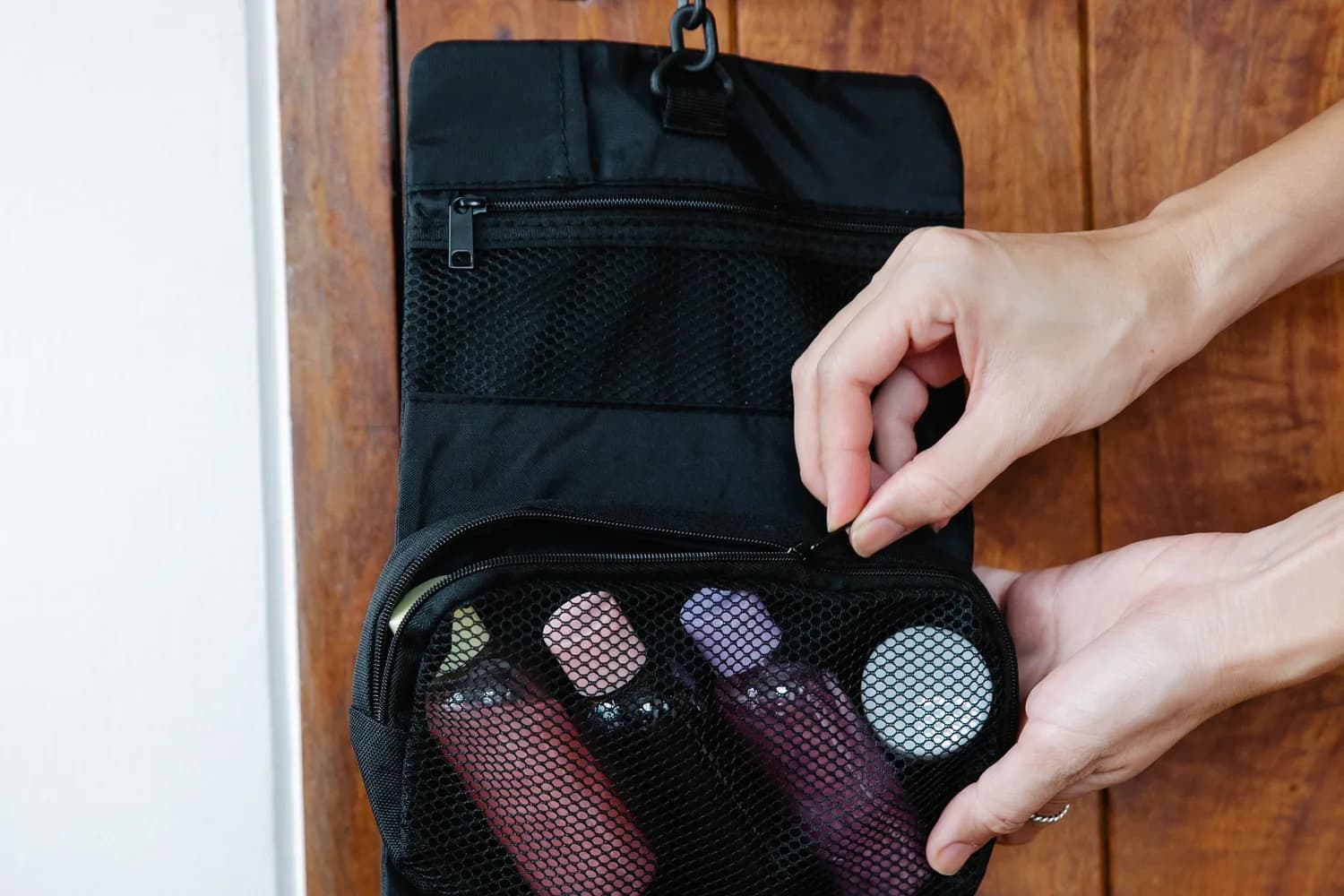
The right travel case keeps bottles upright, contains leaks and gets through airport security without a repack. Here's what to compare, including TSA's liquids rule.
· 4 min read